Project Description
Beaver Survey
Beavers and their breeding sites and resting places are protected by law in England, Scotland and Wales. Where a development could affect suitable habitat, including watercourses, waterbodies and surrounding vegetation, beaver surveys may be required where the species is known within a catchment or the adjacent catchment. Local Planning Authorities may request surveys to support planning applications, together with mitigation proposals where impacts are identified.
Beaver Surveys
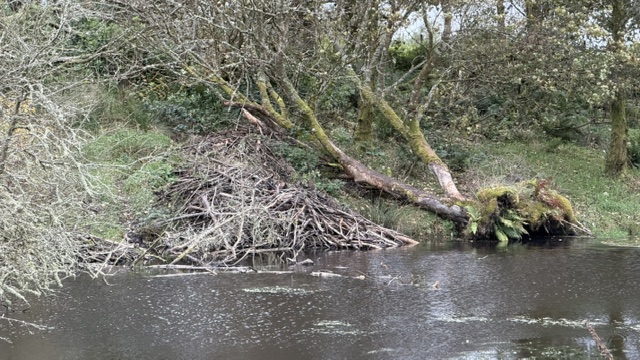
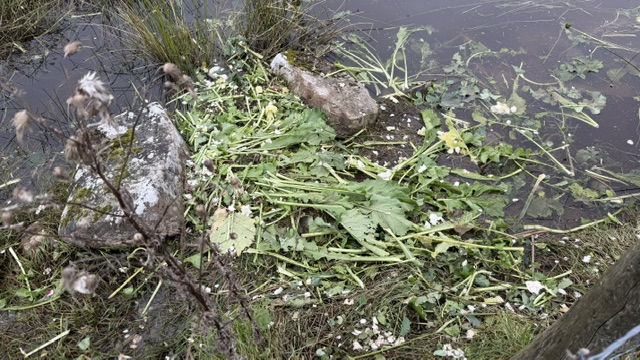
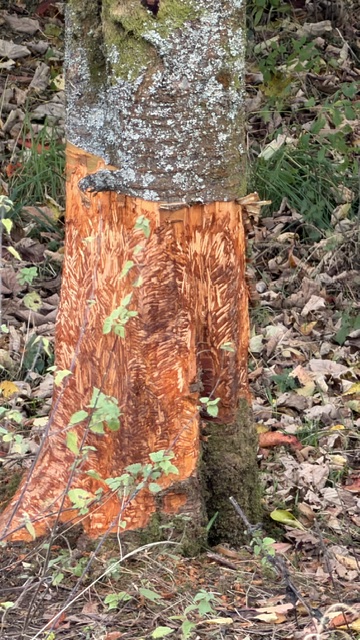
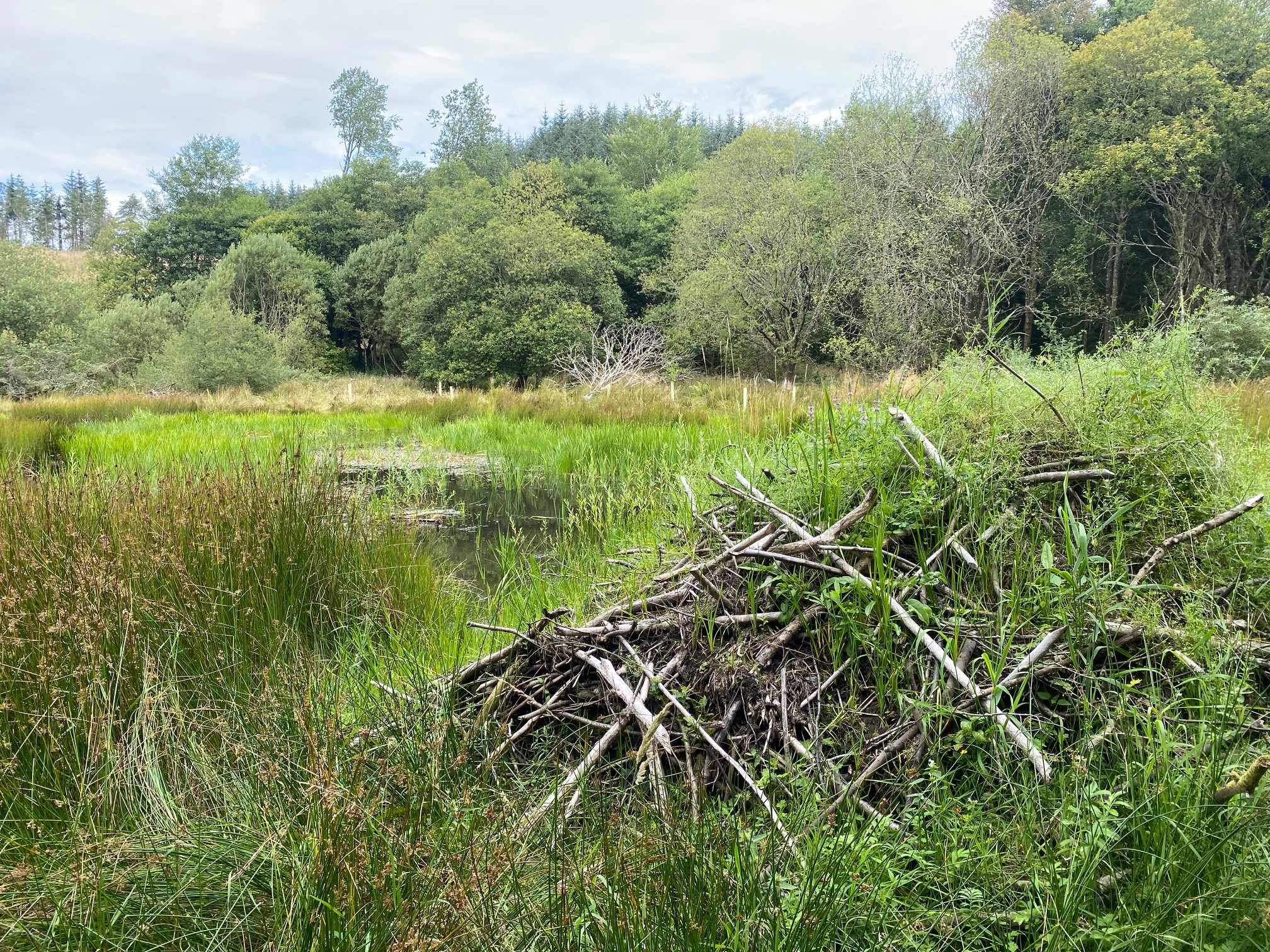
Beaver surveys are undertaken by ecologists through a systematic search of suitable habitat within and around the proposed development area, including upstream and downstream. Beavers are mainly active around dusk and at night, so daytime surveys generally rely on field signs rather than direct sightings. These include gnawed and felled trees, feeding remains, footprints, slides, scent mounds, dams, lodges and burrows. Camera monitoring may also help establish whether particular features are currently in use.
Surveys establish evidence of beaver presence, the distribution of activity and how the area is used for feeding, shelter and movement. The number of visits and any additional monitoring depend on the site conditions and proposed works. Findings inform an assessment of potential impacts and identify any requirements for avoidance, mitigation or licensing. Field signs provide an indication on how a landscape is being used and beaver territories.
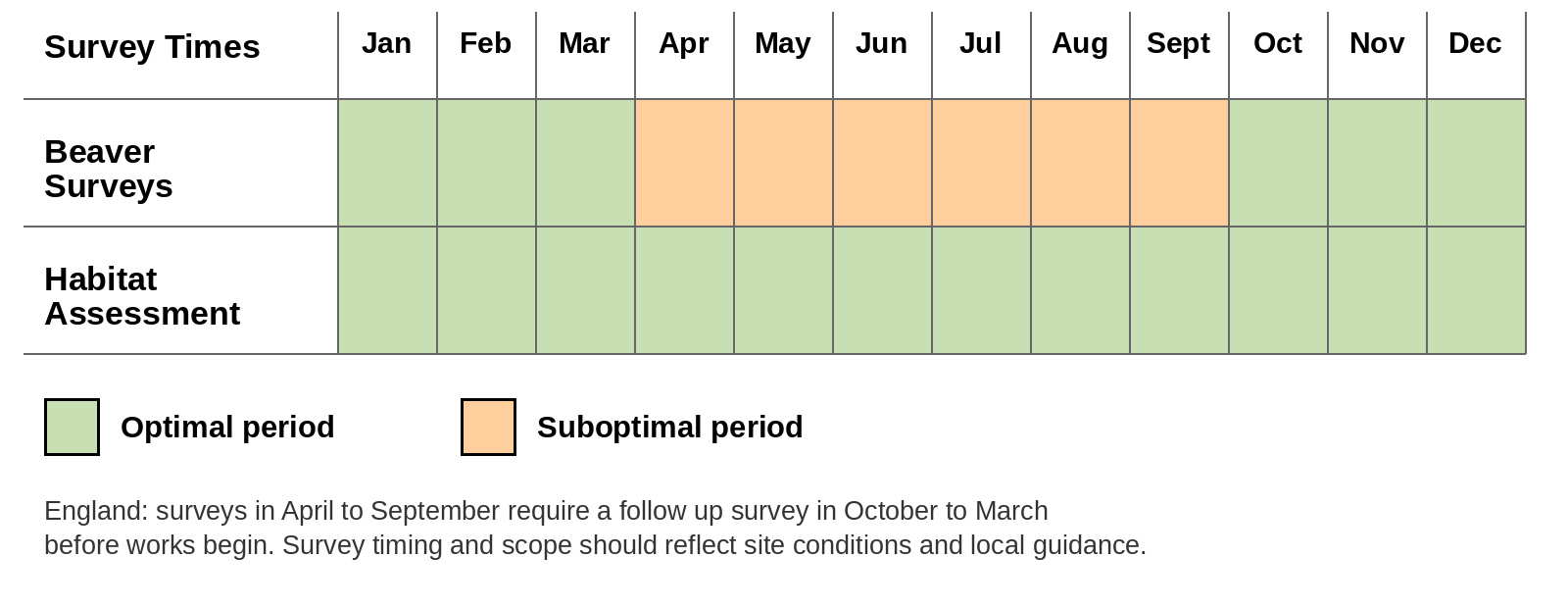
Beaver surveys can be undertaken throughout the year, although autumn to early spring generally provides the best conditions, when bankside vegetation is reduced and signs of activity are more visible. In England, October to March is the recommended survey period, with surveys undertaken between April and September requiring a follow up survey during this period before works begin. Surveys involve searching for feeding signs, dams, lodges, burrows and other evidence of beaver activity. Further visits or camera monitoring may be needed to establish how beavers use the site.
Where proposals affect beavers and their habitats, we provide guidance on avoiding impacts and developing appropriate mitigation. Measures may include retaining habitat along watercourses, establishing protective buffers around lodges and burrows, maintaining water levels and timing works to minimise disturbance. Early assessment helps identify potential constraints and reduce delays to development.
Derogation licences
Beavers are European protected species in England, Scotland and Wales. Where works would otherwise result in an offence, a derogation licence may be required from Natural England, NatureScot or Natural Resources Wales, depending on the location of the site. This can include works that disturb beavers or damage their breeding sites and resting places, including dams that support these features.
Our ecologists can prepare mitigation and compensation strategies to support licence applications and guide clients through the process, including liaison with the relevant statutory body and ecological supervision of licensed works.
The timing of mitigation depends on the proposed activities, the presence of breeding beavers and any licence conditions. Works should be planned to avoid disturbance during sensitive periods. Capturing and relocating beavers is a last resort and requires specialist expertise and the appropriate licences. Where habitat creation or enhancement is necessary, this should be planned early enough to fulfil its intended function before impacts occur.
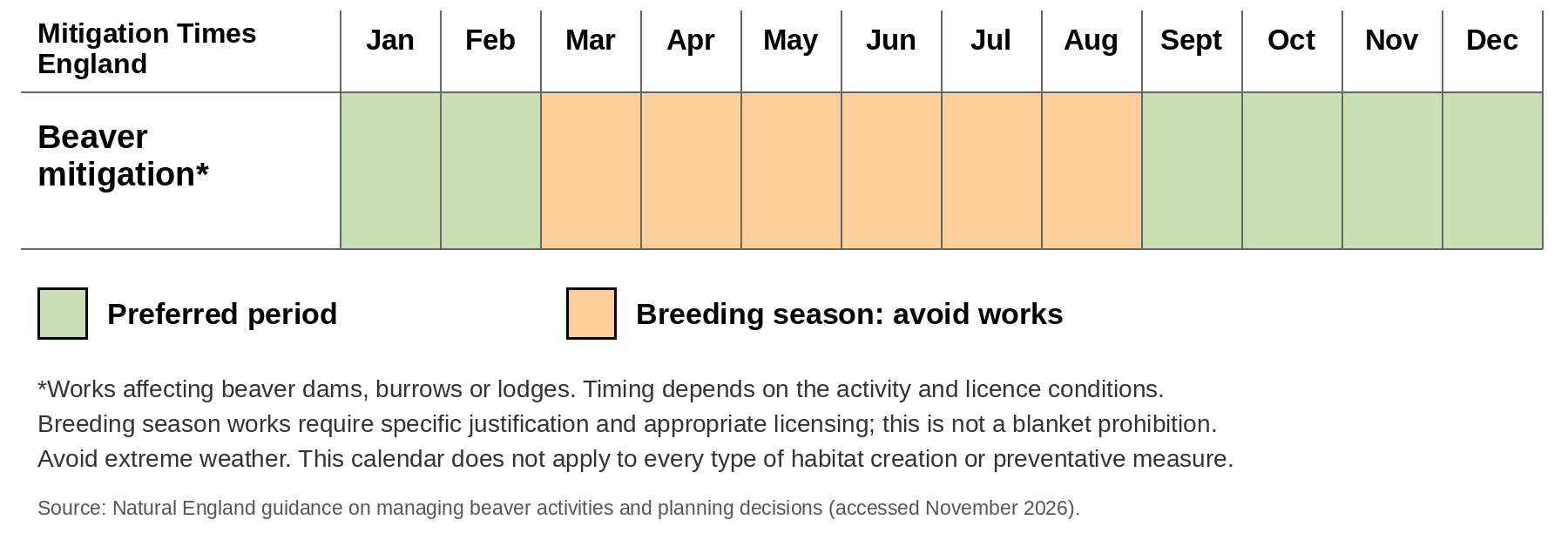
To avoid delays to your schedule it’s important to plan for beavers early as part of the planning and development process by getting us involved early.